What Are the China Top 10 40 ft Container Manufacturers?
China has become a central supplier in the global container equipment market. Its factories serve shipping lines, leasing companies, logistics operators, and regional freight businesses. This introduction examines the China top 10 40 ft container manufacturers through production capability, certification, export experience, design quality, and after-sales support.
The UNCTAD Review of Maritime Transport 2024 reported that the global commercial fleet grew by 3.4% during the previous year. Container ships recorded stronger growth, reflecting continued demand for standardized cargo equipment. Drewry’s Container Census also tracks China’s dominant position in container manufacturing and leasing supply. Exact rankings can change, however. Public industry data often combine factories, parent companies, and trading groups. That distinction deserves more attention.
A 40 ft container may look simple. It is not.
Its corner castings, steel panels, flooring, welds, and locking bars must perform under salt air, crane lifts, road vibration, and repeated stacking. Professor Jean-Paul Rodrigue, a recognized transport geography expert, states, “Containerization has been one of the most important innovations in transportation.” His observation explains why manufacturing quality affects far more than storage. It influences port efficiency, cargo protection, repair costs, and equipment availability.
This guide uses verifiable company information, industry reports, certification evidence, and practical buyer considerations. It does not treat factory size as a complete quality signal. A larger supplier may still provide uneven communication or inconsistent finishing. That is an uncomfortable point, but it matters. Buyers should verify CSC compliance, steel specifications, inspection records, delivery performance, and warranty terms before selecting a manufacturer.
What Defines a Leading 40 ft Container Manufacturer in China
What Defines a Leading 40 ft Container Manufacturer in China
A leading 40 ft container manufacturer combines engineering experience with disciplined production control. The factory should understand the container’s 12.2-meter external length, load distribution, door alignment, and stacking forces. Practical experience matters here. A small welding error can become a serious weakness during repeated handling.
Reliable manufacturers use tested corten steel, durable floor materials, and corrosion-resistant coatings. They control steel thickness, welding temperature, paint coverage, and curing time. Each unit should pass inspections for dimensions, watertightness, door operation, and structural strength. Details matter. Clear inspection records also improve accountability. Buyers should be able to trace materials, production dates, and test results without confusion.
Professional manufacturers communicate technical limits honestly. They explain payload conditions, customization effects, delivery risks, and maintenance needs before production begins. An experienced quality team should inspect both the factory process and finished containers. Independent testing can add confidence when projects involve large fleets or strict international requirements. After-sales support also reveals a manufacturer’s reliability. Fast responses help resolve damaged floors, faulty seals, or coating problems. No factory is perfect. Even strong suppliers may miss minor issues, so transparent correction procedures remain essential. The best partner is not merely the lowest bidder. It is the manufacturer that consistently delivers safe, traceable, and serviceable containers.
Key Criteria for Evaluating China’s 40 ft Container Producers
When assessing China’s top 10 40 ft container manufacturers, buyers should rank evidence, not advertising. ISO 668 defines a standard 40 ft container at 12.192 metres long and 2.438 metres wide. The factory should prove dimensional accuracy with inspection records from each production batch. CSC safety approval, welding quality, corner-casting strength, and door alignment also deserve attention. A low price means little if water enters through a poorly sealed roof.
Production capacity needs independent verification. UNCTAD’s Review of Maritime Transport 2024 states that more than 80% of global merchandise trade by volume moves by sea, keeping container reliability commercially important. A serious producer should disclose monthly output, steel traceability, coating thickness, and rejected-unit rates. Buyers can request weld inspection reports, leak-test videos, and random third-party audits. Numbers matter.
Port performance offers another practical test. The World Bank and S&P Global’s Container Port Performance Index 2023 assessed 405 container ports using vessel time in port. Manufacturers supplying time-sensitive logistics networks should therefore demonstrate consistent delivery, repair support, and spare-part availability. Warranty terms should specify corrosion, flooring, doors, and structural defects clearly. Do not trust a ranking based only on factory size. Even a well-presented audit can miss night-shift quality problems. I would sample finished units from different months, not just inspect the newest container. That extra step feels slow, but it exposes uneven production better than a showroom visit.
China’s Top 10 40 ft Container Manufacturers
China’s top ten 40 ft container manufacturers occupy a critical position in global logistics. Drewry’s Container Census 2024 estimated that Chinese factories produced about 96% of the world’s dry freight containers in 2023. Their scale supports steady supply, standardized dimensions, and competitive pricing. Production lines commonly use corten steel, automatic welding, floor-treatment systems, and multi-stage inspections. A typical 40 ft dry container measures 12.19 meters long and offers roughly 67 cubic meters of internal volume.
Quality still varies between factories. That matters. Experienced buyers should examine steel thickness, weld penetration, door alignment, coating performance, and CSC documentation. The Container xChange Annual Container Market Report 2024 highlighted continuing equipment imbalances and repositioning costs across major trade lanes. Therefore, the strongest manufacturers are not judged by factory size alone. They should also provide reliable delivery windows, traceable inspection records, spare parts, and responsive after-sales support. Some rankings remain imperfect because production data is private and capacities change quickly. A factory may excel at high-volume dry containers but perform less consistently on custom flooring or extreme-weather specifications. Independent pre-shipment inspection remains sensible, even when samples look excellent.
Product Range, Manufacturing Strengths, and Global Markets
China’s top ten 40 ft container manufacturers are often compared through product range, factory capacity, and export reliability. Their catalogs usually include standard dry containers, high-cube units, refrigerated models, open-top designs, and flat racks. Some factories also produce customized containers for construction, storage, and specialized logistics. A 40 ft high-cube model may offer extra interior height, while a reefer container requires stronger insulation and stable temperature control.
Manufacturing strength depends on more than production volume. In factory audits, buyers should check steel preparation, welding consistency, paint thickness, door alignment, and floor treatment. Automated cutting can improve accuracy, but skilled welders still matter. A reliable manufacturer should provide traceable materials, inspection records, load-test information, and clear warranty terms. Small details count. A poorly sealed door can damage cargo during long ocean routes.
Global markets create different demands. European buyers may focus on environmental documentation and corrosion protection. Customers in tropical ports often need stronger coatings and better ventilation. Long-distance routes also test corner castings, hinges, and flooring. Many Chinese factories support container shipping, port delivery, and customized specifications across Asia, Europe, Africa, the Middle East, and the Americas. However, published capacity can be difficult to verify. I would not judge a factory by photographs alone. Recent inspection reports, sample measurements, and communication during production reveal more. Even strong manufacturers can miss deadlines when steel prices, port congestion, or approval changes disrupt planning.
How to Choose the Right Chinese 40 ft Container Manufacturer
What Are the China Top 10 40 ft Container Manufacturers?
How to Choose the Right Chinese 40 ft Container Manufacturer
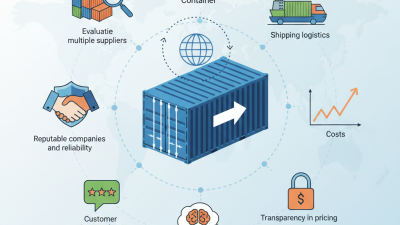
Choosing a Chinese 40 ft container manufacturer requires more than comparing quotations. UNCTAD’s Review of Maritime Transport 2024 reported that global container ship capacity increased about 8.8% between January 2023 and January 2024. This growth raises demand, but it also makes quality differences easier to miss. Check compliance with ISO 668, ISO 1496, and the applicable CSC requirements. Request recent test records, welding inspection reports, and steel certificates. A low price can hide thinner panels, weak corner castings, or poor paint preparation.
Visit the production line when possible. Observe steel cutting, floor installation, welding, sealing, and final dimensional checks. Ask how the factory controls moisture, coating thickness, and door alignment. A reliable supplier should provide traceable serial numbers and clear inspection photos. Confirm the payload, tare weight, internal dimensions, and delivery schedule in the contract. These details sound basic. They are often where disputes begin. I would also order a sample unit before a large shipment, although this adds time and cost.
Tips: Compare at least three factories using the same specification sheet. Ask for an independent pre-shipment inspection. Verify that certificates match the actual container numbers. Industry data can show market capacity, but it cannot prove one factory’s workmanship.
My own caution is simple: never treat polished brochures as operational evidence. A container must perform after months of handling, weather exposure, and repeated loading.