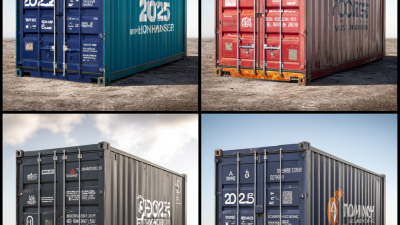
10 Best Cargo Shipping Container Options for Global Buyers
Choosing the right cargo shipping container affects product safety, handling costs, and delivery reliability. Global buyers face more than a simple size decision. A dry container may suit boxed machinery, while a reefer protects temperature-sensitive goods during long ocean routes. Open-top and flat-rack models can handle heavy, tall, or awkwardly shaped equipment. Each option solves a different logistics problem.
This guide examines ten practical container choices for international purchasing teams. It considers dimensions, payload limits, door access, ventilation, insulation, and maintenance history. It also explains why verified specifications matter more than attractive online photographs. A 40-foot unit can offer useful capacity, but poor loading plans may waste that space quickly. Small details matter. Floor condition matters. Door seals matter. Corrosion matters.
Reliable buyers should request inspection records, valid CSC-related documentation, and clear manufacturer specifications. Local port rules and carrier requirements must also be checked before booking. These details vary by route and equipment type. Experience shows that the cheapest container is not always the lowest-cost choice. Repairs, delays, and unsuitable fittings can quietly increase the final bill. No guide can remove every uncertainty. Even experienced teams sometimes overlook regional handling limits or seasonal availability. That weakness deserves attention. The following options provide a practical starting point for comparing performance, cargo suitability, and long-term value across global supply chains.

Cargo Shipping Containers: Purpose, Structure, and Global Applications
Cargo shipping containers are standardized units designed to protect goods during road, rail, and sea transport. Their main purpose is simple: reduce handling, damage, and transfer delays. A dry container suits boxed products, machinery, and household cargo. High-cube models provide extra vertical space for bulky loads.
Their structure combines weather-resistant steel panels, reinforced corner posts, locking doors, and a strong wooden or composite floor. Corner castings allow cranes and twist-lock systems to lift and secure the unit safely. Ventilation openings help limit condensation, but they cannot solve every moisture problem. It needs protection.
Refrigerated containers support temperature-sensitive food, medicines, and other approved goods. Open-top units handle tall cargo, while flat racks carry heavy machinery or irregular loads. Tank containers are used for regulated liquids under suitable technical controls.
Global buyers should check dimensions, payload limits, floor condition, door seals, and inspection records before purchase. A clean exterior may hide corrosion beneath the floor. That assumption can fail.
Applications vary by region and supply chain. Construction companies may use containers for equipment storage, while exporters rely on them for predictable intermodal movement. Remote projects often convert units into workshops or secure storage areas. However, modifications can weaken structural strength or affect transport approval. Professional inspection, accurate weight data, and documented handling procedures improve reliability across borders. Planning is rarely perfect. A practical review before loading can prevent expensive surprises.
Main Container Types and Their Suitable Shipping Uses
10 Best Cargo Shipping Container Options for Global Buyers
Cargo selection begins with the load, not the cheapest quote. UNCTAD’s Review of Maritime Transport 2024 records 12.3 billion tonnes of seaborne trade in 2023. That scale rewards disciplined container matching. For general cartons, 20-foot and 40-foot dry containers remain practical workhorses. A 40-foot high-cube adds vertical space for light, bulky cargo. Do not confuse volume with payload.
Reefers protect chilled produce, pharmaceuticals, and temperature-sensitive foods through controlled cooling. Open-top containers suit tall machinery loaded by crane. Flat racks support oversized equipment with strong lashing points. Tank containers transport approved liquids under documented handling procedures. Ventilated units help cargo that releases heat or moisture. Insulated containers reduce temperature swings, but they cannot replace active refrigeration. Side-door containers improve access for warehouses with limited loading space. Platform containers support exceptionally wide or heavy pieces. Double-door units speed loading from either end. The choice is rarely perfect.
In practice, I would check dimensions, center of gravity, floor strength, ventilation, and port restrictions before booking. A high-cube may look efficient, yet poor stacking can waste its extra height. The World Bank’s Container Port Performance Index 2023 assessed 405 container ports, showing how handling performance influences delivery reliability. Measure twice. Then review the cargo photographs, packing list, and declared weight independently. Small errors become expensive at the terminal.
Sources: UNCTAD, Review of Maritime Transport 2024; World Bank and S&P Global Market Intelligence, Container Port Performance Index 2023.
Container Sizes, Capacities, Materials, and Condition Grades
Global buyers can choose from ten practical container options, depending on cargo shape, volume, and handling needs. A 20-foot standard container holds about 33 cubic meters. A 40-foot model offers roughly 67 cubic meters. The 40-foot high-cube version adds height and usually reaches 76 cubic meters. A 45-foot high-cube container provides more space, but port acceptance varies. Open-top and hard-top units suit tall cargo. Flat racks handle machinery and oversized loads. Refrigerated containers protect temperature-sensitive goods. Insulated containers reduce temperature changes. Tank containers carry approved liquids under strict technical controls.
Most units use corrosion-resistant weathering steel, while floors often combine hardwood and protective coatings. Aluminum components can reduce weight, but repairs may be less convenient in some regions. Capacity figures are not fixed promises. Door openings, wall thickness, and cargo weight limits reduce usable space. Check the container’s data plate before booking.
Condition grades require careful judgment. New or one-trip units typically show minimal wear. Cargo-worthy containers should pass structural and safety inspections. Wind-and-water-tight units may protect cargo, yet they can still have dents or older floors. As-is units cost less and demand closer inspection. Check door seals, corner posts, roof patches, floor softness, rust depth, and the inspection plate. A clean exterior can mislead. I have seen small floor damage create expensive loading delays. Request current photos, internal measurements, repair records, and verified tare and payload figures before payment.
How to Select the Right Container for Cargo and Transport Routes
Selecting the right shipping container starts with the cargo and transport route, not the container’s appearance. A standard dry container suits boxed, palletized, and non-temperature-sensitive goods. A high-cube model adds valuable interior height for lightweight, bulky cargo. Refrigerated containers protect chilled products, but they require reliable power at terminals and during inland transport.
Route conditions matter. Check port handling equipment, road limits, rail clearances, weather exposure, and unloading access before booking. Open-top containers help with tall machinery, while flat racks support oversized loads that cannot fit through standard doors. Tank containers suit approved liquid cargo, but compatibility and inspection records require careful verification. A perfect choice rarely exists. Cost, protection, and availability must be balanced.
Tips: Measure every item, including packaging and skids. Leave clearance for doors and lifting points. Confirm maximum gross weight with the carrier and destination terminal. Ask for recent inspection details, especially for older units. I have seen small measurement errors create expensive reloading work. Allow extra time when a specialized container is needed, because availability can change quickly. Temperature-sensitive cargo also needs a written temperature range, data logging, and a backup plan for power interruptions.
International Standards, Costs, Inspection, and Purchase Considerations
For global buyers, the best container is not always the newest or cheapest.
The practical shortlist includes standard 20-foot and 40-foot units, high-cube models, refrigerated containers, open-top units, flat racks, tank containers, insulated units, side-door designs, platform containers, and half-height units. Each option solves a different loading problem. A high-cube unit adds valuable vertical clearance. A flat rack suits oversized machinery, but securing points must be checked carefully.
International compatibility starts with the ISO 668 size framework and a valid CSC safety plate. Confirm the plate before paying. It should show inspection status, maximum gross mass, and manufacturer details. Ask for door dimensions, tare weight, floor condition, and previous use.
Photos help. They do not replace an on-site inspection. Check corner posts, roof seams, locking bars, welds, and hidden corrosion beneath the flooring. A dry smell is not proof of a dry interior.
Purchase cost is only one line. Add inland transport, port handling, storage, customs documentation, insurance, repairs, and possible refrigeration power charges. Compare delivered cost.
In field inspections, small dents are often harmless, while a twisted frame can make loading unsafe. I have seen buyers focus on paint and miss damaged door gaskets. That mistake is easy to repeat.
For used units, request a dated inspection report and a clear repair history. For new units, confirm lead time, warranty terms, and delivery tolerances in writing. Requirements can change by route, cargo weight, and destination port, so a local surveyor’s review remains worthwhile.
Related Posts
-
2025 Top 5 One Trip Shipping Containers: Best Choices for Your Needs
-
How to Choose the Right Self Storage Containers for Your Needs?
-

Why Choose Second Hand Shipping Containers for Your Next Project?
-
Top 10 Steel Storage Containers for Your Global Procurement Needs?
-
10 Best Cargo Storage Containers for Efficient Space Management
-

Best Cargo Storage Containers for Global Buyers in 2026?
Get a quote
Get a quote
Read More
Accept AllReject AllCustomise
Privacy Overview
| Cookie | Duration | Description |
|---|---|---|
| cookielawinfo-checkbox-advertisement | 1 year | Set by the GDPR Cookie Consent plugin, this cookie records the user consent for the cookies in the "Advertisement" category. |
| cookielawinfo-checkbox-analytics | 11 months | This cookie is set by GDPR Cookie Consent plugin. The cookie is used to store the user consent for the cookies in the category "Analytics". |
| cookielawinfo-checkbox-functional | 11 months | The cookie is set by GDPR cookie consent to record the user consent for the cookies in the category "Functional". |
| cookielawinfo-checkbox-necessary | 11 months | This cookie is set by GDPR Cookie Consent plugin. The cookies is used to store the user consent for the cookies in the category "Necessary". |
| cookielawinfo-checkbox-others | 11 months | This cookie is set by GDPR Cookie Consent plugin. The cookie is used to store the user consent for the cookies in the category "Other. |
| cookielawinfo-checkbox-performance | 11 months | This cookie is set by GDPR Cookie Consent plugin. The cookie is used to store the user consent for the cookies in the category "Performance". |
| CookieLawInfoConsent | 1 year | CookieYes sets this cookie to record the default button state of the corresponding category and the status of CCPA. It works only in coordination with the primary cookie. |
| viewed_cookie_policy | 11 months | The cookie is set by the GDPR Cookie Consent plugin and is used to store whether or not user has consented to the use of cookies. It does not store any personal data. |
| Cookie | Duration | Description |
|---|---|---|
| _cs_c | 1 year 1 month | The cookie is used by Content Square to save the user consent to be tracked. |
| Cookie | Duration | Description |
|---|---|---|
| _cs_id | 1 year 17 days 20 hours 13 minutes | This cookie is used to store the ContentSquare's user identifier ID. This is a persistent cookie and expires after 13 months. |
| _cs_s | 1 hour | This cookie is used to store the number of page's viewed by a visitor within the session for ContentSquare's solution. |
| _ga | 1 year 1 month 4 days | Google Analytics sets this cookie to calculate visitor, session and campaign data and track site usage for the site's analytics report. The cookie stores information anonymously and assigns a randomly generated number to recognise unique visitors. |
| _ga_* | 1 year 1 month 4 days | Google Analytics sets this cookie to store and count page views. |
| _gcl_au | 3 months | Google Tag Manager sets the cookie to experiment advertisement efficiency of websites using their services. |
| Cookie | Duration | Description |
|---|---|---|
| test_cookie | 15 minutes | doubleclick.net sets this cookie to determine if the user's browser supports cookies. |
| Cookie | Duration | Description |
|---|---|---|
| _cs_root-domain | session | Description is currently not available. |
| _cs_same_site | session | Description is currently not available. |